Causes, Triggers, Types & How to Treat Breakouts
Acne is one of the most common skin concerns we see at TrueSkin Clinic.
One of the questions we hear most often is:
Why do I have acne?
Acne usually develops because several factors interact, including excess sebum production, clogged hair follicles, inflammation, hormonal activity, genetics, and changes in the skin microbiome.
Stress, certain medications, skincare products, and lifestyle factors can also contribute to breakouts.
When it comes to acne, it’s all about balance.
Too much oil can be a problem, but so can stripping your skin of all its oil. Exfoliating can help, but over-exfoliating can make things worse. Cleansing is important, but aggressive cleansing can irritate your skin.
Let’s look at some of the most common questions about acne and what may be triggering your breakouts.
What causes acne?
Acne rarely has just one cause.
Acne develops when several things happen within the hair follicle and oil gland.
Common contributing factors include:
- Excess oil (sebum)
- Dead skin cell buildup
- Clogged pores
- Inflammation
- Hormonal activity
- Changes in the skin microbiome
- Genetics
For many people, there isn’t one single cause.
Acne is usually a combination of several factors — and everyone’s combination can be different.
Why am I suddenly getting acne?
It’s possible to suddenly develop acne even if you’ve never had significant breakouts before.
Some common triggers include:
- Hormonal changes
- Increased stress
- Changes in skincare or makeup
- New haircare products
- Certain medications or supplements
- Changes in diet or lifestyle
- Increased oil production
- Skin irritation or a weakened skin barrier
- Heat, sweat, friction, or occlusive clothing and equipment
If your skin suddenly changes, think about what else changed around the same time. Sometimes the trigger isn’t obvious.
Can oily skin cause acne?
Excess oil can contribute to acne, but oily skin alone doesn’t cause acne.
Your skin needs oil. Sebum helps protect the skin and keep it healthy.
The problem can occur when there is too much oil, especially when it combines with dead skin cells and contributes to clogged pores.
This is another example of why balance is so important.
The goal isn’t to remove every bit of oil from your skin. It’s to help regulate oil production without drying, irritating, or stripping the skin.
Can clogged pores cause acne?
Yes. Clogged pores are an important part of the acne process.
When oil and dead skin cells build up inside a pore, they can create a blockage called a comedone.
There are two common types:
- Whiteheads: closed clogged pores
- Blackheads: open clogged pores that appear dark because the material inside the pore has oxidized
A clogged pore can sometimes become inflamed and develop into a pimple.
Does not exfoliating cause acne?
A buildup of dead skin cells can contribute to clogged pores, so appropriate exfoliation can be helpful for some acne-prone skin.
But here’s the catch:
More exfoliation does not mean better skin.
Using too many scrubs, acids, peels, or exfoliating products can irritate your skin and weaken the skin barrier. This can increase inflammation and potentially make breakouts worse.
Again, it’s all about balance.
The goal isn’t to constantly remove dead skin. It’s to support healthy skin renewal without causing irritation.
Can inflammation cause acne?
Yes. Inflammation is a major part of acne.
When a clogged follicle becomes inflamed, you can develop red, swollen, tender pimples or deeper breakouts.
Inflammation can also contribute to the redness and discoloration that remain after a pimple has healed.
That’s why acne care isn’t only about keeping pores clear. It’s also about calming inflammation and supporting a healthy skin barrier.
Is acne caused by bacteria?
Bacteria can play an important role in acne, but acne is not simply an infection caused by having “dirty” skin.
A type of bacteria called Cutibacterium acnes (C. acnes) naturally lives on healthy skin and is part of the skin’s normal microbiome. Having C. acnes on your skin is completely normal and does not mean your skin is dirty.
However, when a hair follicle becomes clogged with excess sebum and dead skin cells, changes in the follicle’s environment and microbiome can allow C. acnes to contribute to inflammation and the development of acne.
This is why acne isn’t simply a matter of having “too much bacteria.” It’s more complicated than that. The interaction between oil production, clogged pores, the skin microbiome, and inflammation all play a role.
The goal isn’t to eliminate all bacteria from your skin. Instead, effective acne care focuses on maintaining a healthy skin barrier and microbiome while addressing excess oil, clogged pores, and inflammation.
So if you have acne, it doesn’t mean your skin is dirty — and aggressively scrubbing or over-cleansing isn’t the solution.
Balance is key.
Can hormones cause acne?
Yes. Hormones are a very common acne trigger.
Androgen hormones can stimulate the oil glands and increase sebum production. This can contribute to clogged pores and inflammation.
Hormonal changes can occur during:
- Puberty
- Menstrual cycles
- Pregnancy
- Perimenopause
- Menopause
- Certain hormonal medications
Hormonal acne is often seen around the chin, jawline, and lower face, although it can occur in other areas as well.
Can stress cause acne?
Stress can contribute to acne and may make existing acne worse.
Stress can affect hormones, inflammation, sleep, and other habits that can influence your skin.
When we’re stressed, we may also touch our face more, pick at our skin, sleep less, change our eating habits, or stop following our usual skincare routine.
Stress isn’t necessarily the only cause of your acne, but it can certainly be one piece of the puzzle.
Can skincare products cause acne?
Yes. Certain skincare, makeup, sunscreen, and haircare products can contribute to clogged pores or irritation in some people.
However, this doesn’t mean that everything you put on acne-prone skin needs to be oil-free or that you should stop moisturizing.
Acne-prone skin still needs hydration.
A healthy skin barrier is important, and stripping the skin can sometimes make things worse.
The goal is to find products that provide what your skin needs without creating unnecessary congestion or irritation.
Can hair products cause acne?
Yes. Some hair products contain oils, waxes, or other ingredients that can contribute to clogged pores in some people.
This can be especially noticeable around the:
- Hairline
- Forehead
- Temples
- Neck
- Upper back
If you suddenly develop small bumps around your hairline or forehead, take a look at your shampoo, conditioner, styling products, and leave-in treatments.
Can diet cause acne?
Diet and acne can be complicated.
There isn’t one specific food that causes acne in everyone. However, research suggests that a high-glycemic diet may influence acne in some people.
Some people may also notice a connection between certain dairy products and their breakouts.
That doesn’t mean you need to eliminate every food you enjoy.
Instead, look for patterns.
If you notice that your skin consistently changes after certain foods or dietary habits, that information can be useful.
And once again, balance is key.
Can supplements cause acne?
Yes. Certain supplements may contribute to acne or acne-like breakouts in some people.
For example, vitamin B12 supplements can sometimes trigger acneiform eruptions, which are acne-like breakouts that may appear after starting B12 supplementation.
Certain hormonal supplements may also influence hormone levels and oil production, which can potentially worsen acne in susceptible individuals.
If you notice a sudden change in your skin after starting a new supplement, it’s worth discussing it with your healthcare provider or pharmacist.
Don’t stop a prescribed medication or medically necessary supplement without professional guidance.
Can medications cause acne?
Yes. Some medications can cause or worsen acne or acne-like breakouts.
The specific medications involved can vary, and not every medication-related breakout is technically acne.
If your acne started or became significantly worse after beginning a new medication, talk to your doctor or pharmacist.
Don’t stop a prescribed medication on your own.
Can washing my face too much make acne worse?
Yes.
It might seem logical that washing your face more often would prevent acne, but aggressive cleansing can irritate your skin and weaken your skin barrier.
Acne-prone skin generally benefits from gentle, consistent cleansing rather than harsh scrubbing or repeatedly washing throughout the day.
Your skin needs to be clean — but it also needs to be protected.
Healthy skin is about balance, not about doing more.
Why does my acne keep coming back?
Acne can be recurrent because the factors contributing to it may still be present even after an individual breakout has healed.
You may continue to experience hormonal fluctuations, excess oil production, clogged pores, inflammation, stress, or irritation from products.
This is why acne management often requires a consistent, long-term approach rather than simply treating each pimple as it appears.
Is acne caused by poor hygiene?
Not automatically.
Having acne does not mean that you’re not clean.
Acne is influenced by many different factors, including oil production, clogged pores, inflammation, hormones, genetics, and environmental and lifestyle factors.
In fact, over-cleansing and aggressively scrubbing the skin can cause more irritation.
You don’t need to punish your skin to clear it.
The goal is to find the right balance between cleansing, exfoliating, hydrating, and protecting your skin.
Why am I getting acne as an adult?
Adult acne can be influenced by several factors, including:
- Hormonal fluctuations
- Stress
- Skincare and cosmetics
- Medications
- Occlusive products
- Oil production
- Perimenopause
- Changes in the skin barrier
- Genetics
What type of acne do I have?
Acne can look different depending on which processes are occurring in the follicle.
Common types and lesions include:
- Comedonal acne
- Inflammatory acne
- Papules
- Pustules
- Nodules and cysts
Whiteheads and blackheads are considered non-inflammatory lesions, while papules and pustules are inflammatory lesions. Deeper nodules and cysts can be more severe and may increase the risk of scarring.
How do I get rid of acne?
A good acne-management approach may include:
- Gentle, consistent cleansing
- Moisturizing
- Appropriate acne-active ingredients
- Avoiding excessive exfoliation
- Non-comedogenic products when appropriate
- Managing individual triggers
- Professional treatments
The right approach depends on what is contributing to your acne and how your skin is responding.
Depending on your skin, professional facials may also be part of a customized acne treatment plan.
How can professional acne treatment help?
If you’re looking for acne treatment in Calgary, a professional skin assessment at TrueSkin Clinic can help identify the factors contributing to your breakouts and determine which treatment may be appropriate for your skin.
Why is it important to find out what is triggering my acne?
Because not all acne is the same.
Two people can both have acne but have completely different contributing factors.
One person may have primarily hormonal acne, while another may be dealing with clogged pores, irritation from products, stress, or a combination of several factors.
Understanding your individual skin can help you avoid the frustrating cycle of buying product after product without knowing what your skin actually needs.
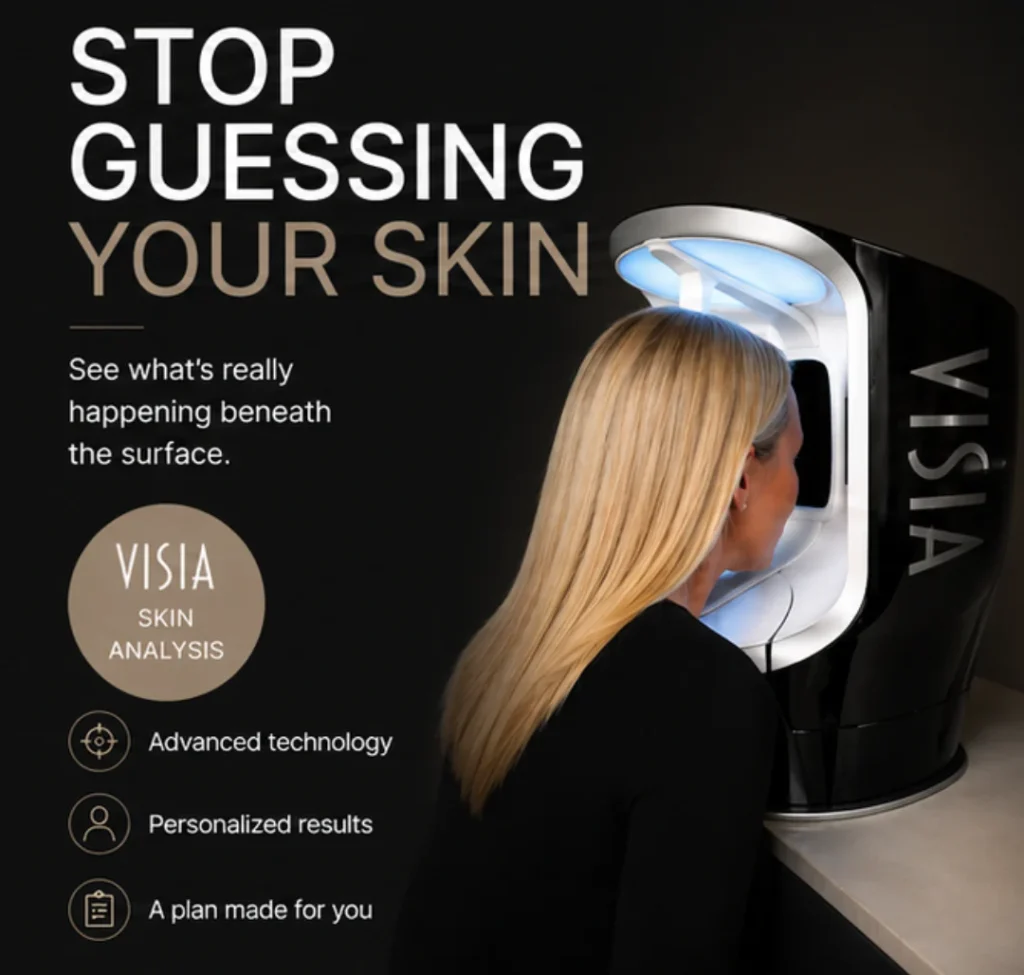
At TrueSkin Clinic in Calgary, we can begin with a VISIA Skin Analysis to take a closer look at your skin.
What Is a Skin Analysis at TrueSkin Clinic?
A skin analysis at TrueSkin Clinic is a 90-minute personalized consultation performed by our Advanced Skin Therapist and Owner, Isabelle Ouellet, who has over 30 years of experience in skincare.
During your appointment, Isabelle takes the time to understand your skin from every angle. She will discuss your specific skin concerns and goals, review your current skincare routine, and learn about your skin history and any factors that may be affecting your skin.
Your skin is then analyzed using the VISIA Skin Analysis system, an advanced imaging technology that provides a detailed look at your skin’s surface and underlying concerns.
This can help identify concerns that may not be visible to the naked eye, including areas of pigmentation, redness, texture, pores, and other signs of skin damage.
Based on your consultation and VISIA results, Isabelle will create a customized skincare and treatment plan designed around your individual skin needs and goals.
If you’re struggling with acne, a skin analysis can be an important first step in understanding what may be contributing to your breakouts and determining the right approach for your skin.
Instead of guessing what your skin needs, let’s look at what’s actually happening.
When should I see a professional about my acne?
Consider seeking professional advice if:
- Your acne is persistent or keeps coming back
- You have painful or deep breakouts
- You’re developing acne scars
- Your acne is affecting your confidence
- You’ve tried multiple products without improvement
- Your acne suddenly became significantly worse
- You’re not sure whether you’re dealing with acne or another skin condition
A professional can help you determine what type of acne you’re experiencing and what factors may be contributing to it.
The Bottom Line: Understanding Acne Starts Beneath the Surface
Acne isn’t caused by one single thing.
It’s often a combination of oil production, clogged pores, inflammation, hormones, bacteria, genetics, skincare, stress, medications, supplements, and lifestyle factors.
And remember:
It’s all about balance.
Too much oil can contribute to congestion, but stripping all the oil from your skin isn’t the solution.
Exfoliation can help, but too much can cause irritation.
Cleansing is important, but over-cleansing can damage your skin barrier.
Hydration is important, even for oily and acne-prone skin.
The goal isn’t to fight your skin. It’s to understand it.
At TrueSkin Clinic in Calgary, we believe that the first step toward clearer skin isn’t necessarily buying another acne product. It’s understanding why your skin is breaking out in the first place.